
Ahmed Adam
Book Title: Civil Uprisings in Modern Sudan
Author: Willow Berridge
Publisher: Bloomsbury Publishing – London/New York
Publication Date: 2015
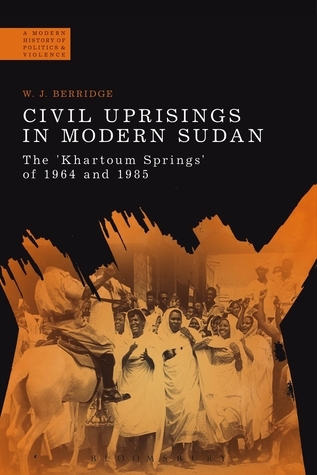
In her book published by Bloomsbury, Willow Berridge, a historian at Newcastle University, argues that the October 1964 Revolution in Sudan was a singular event that challenged two dominant perceptions among scholars.The first assumption held that regimes in the Middle East and Africa could only be overthrown through military coups; the second maintained that political parties in these regions played little or no influential role during the second half of the twentieth century.
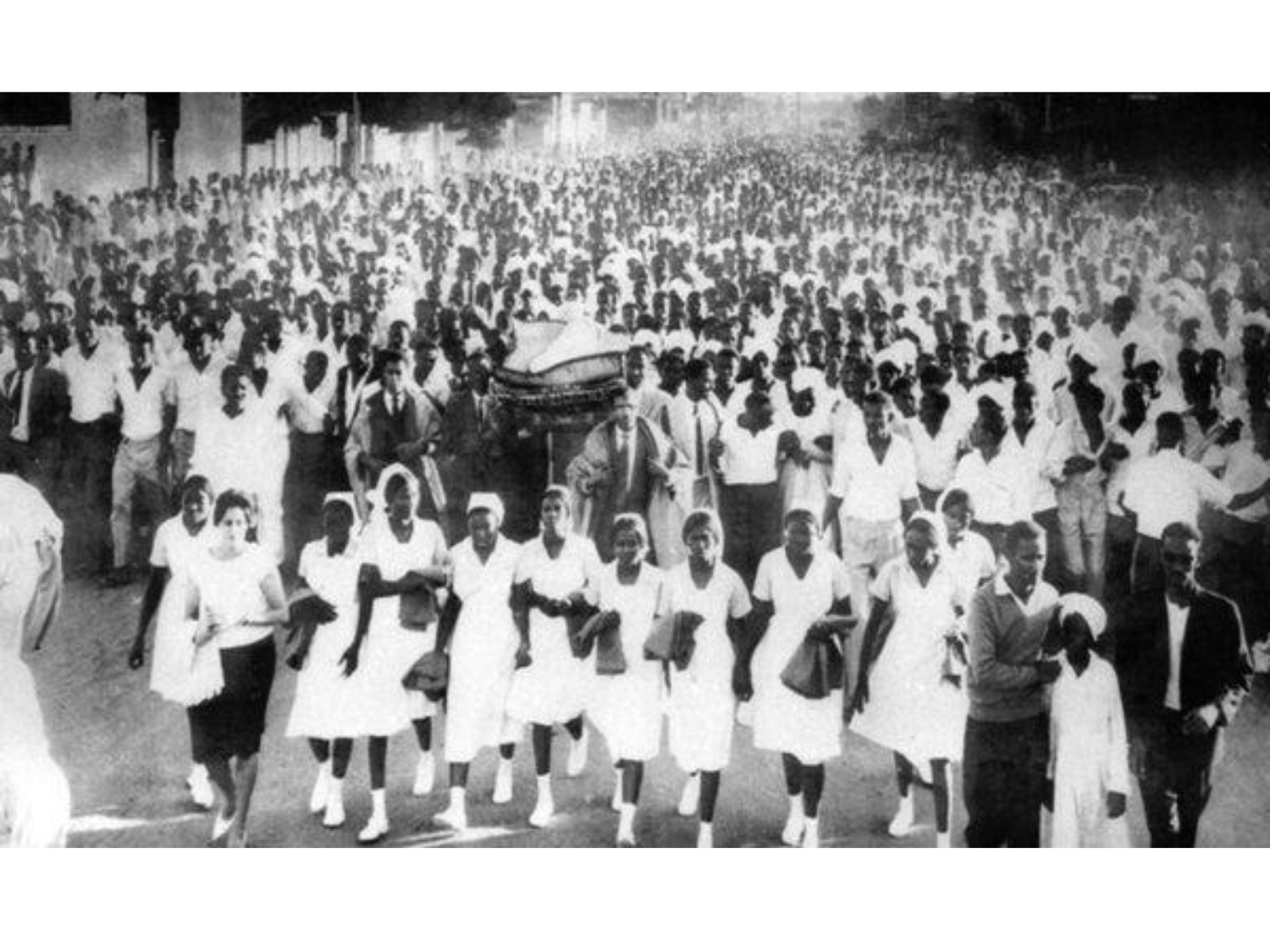
Berridge offers a detailed analysis of the conditions that enabled Sudan to defy these expectations and produce two exceptional political moments, the October 1964 and April 1985 revolutions. She highlights the peaceful character of the October demonstrations and points out the strikingly non-religious nature of their slogans, despite the participation of figures who would later become leaders of political Islam in Sudan.
Her analysis explores how the educated elite interpreted the October Revolution as a national movement, one that transcended ideological divisions, at least temporarily, in pursuit of a shared objective: the overthrow of the Abboud regime.
According to Berridge, Ibrahim Abboud’s regime was the first in Sudan’s history to introduce preventive detention and to ban all political activity not aligned with its agenda. Abboud, she argues, relied increasingly on coercion and repression to maintain power, given his weak popular base. In December 1959, a group of infantry officers were executed for attempting to overthrow the regime. Two years later, in 1961, the Sudanese Railway Union was dissolved, and Khartoum University was shut down following student demonstrations.
Berridge notes that while Abboud’s measures pale in comparison to the more brutal actions of Jaafar Nimeiri and Omar al-Bashir in later years, these acts of repression were nonetheless politically unprecedented at the time. The shooting of student Ahmed al-Qurshi, following a series of escalating confrontations between university students and the military, became the immediate catalyst for mass demonstrations that ultimately brought down the regime.
There are, however, differing interpretations of how and why the Abboud government fell so swiftly. Some scholars argue that despite the scale of the protests following al-Qurshi’s death, the regime’s downfall was not inevitable, and that it was the declaration of general civil disobedience that accelerated its collapse. Others contend that Abboud was forced out under pressure from the Free Officers, while another view holds that the aging general resigned voluntarily, exhausted by power.
Berridge cautions that “we must bear in mind that Abboud did not surrender immediately; his first reaction was to arrest two judges who had participated in the demonstrations that led to the declaration of civil disobedience.” She further reflects on the nature of the revolution, observing that while the October Revolution largely succeeded through nonviolent mobilization, it cannot be described as wholly peaceful. “The revolution,” she writes, “assumed a violent character at key turning points, yet it would be misleading to claim that violence was decisive in compelling the regime to step down.” According to Berridge, the leadership—comprising political parties, trade unions, and professional associations, did not encourage violence, perhaps because they shared the same privileged social background as the Abboud regime and had no interest in inciting chaos that might threaten their own class interests.
In the second chapter, entitled ‘The 1985 Uprising: Did Nimeiri Destroy Himself?‘, the author returns to the beginnings of the May Revolution, viewing Jaafar Muhammad Nimeiri’s coup in 1969 as a result of the failures of the October Revolution and the failure of the parliamentary system that was established to adopt any progressive political strategies, in addition to its inability to achieve peace in the south. She then reviews the bloody history of Nimeiri’s regime in the 1970s, which was marked by political executions, the events of Al-Jazirah Al-Aba, and others. She argues that the bloody nature of the regime contributed to delaying the uprising against it, attributing the uprising to the successive crises that befell the regime until the mid-1980s. The economic crises were partly the result of external factors, such as rising oil prices, declining demand for Sudan’s raw resources, and pressure from the International Monetary Fund to force African and Middle Eastern countries to adopt austerity policies. However, the deterioration was also due to internal factors, such as corruption and misguided economic policies that focused on creating large and ambitious development projects without sufficient capital to run them. At the same time, existing agricultural projects were neglected, preventing the government from dealing with the famine that occurred between 1983 and 1985. Nimeiri refused to acknowledge it, and thousands died as a result, while others fled to Khartoum, only to be confronted by Nimeiri’s security forces, who forced them to return to their regions.
The author concludes that it was economic deterioration that sparked the uprising that led to the fall of the regime, compounded by Nimeiri’s inability to deal with the popular revolution and his loss of all his political allies after his regime became a one-man show, in addition to his deteriorating health, which made him incapable of making sound decisions. For example, the declaration of Sharia law and the events that accompanied it, such as the execution of Professor Mahmoud Muhammad Taha. She says: ‘Nimeiri may have contributed to his own downfall, but it was the political parties, professional unions and student unions that determined the manner of his downfall, after coordinating among themselves to restore democracy.’ The author notes that religious discourse was more prominent in the April 1985 uprising than in October 1964, after Nimeiri placed religion at the centre of political life by declaring Islamic law, which forced opponents to criticise him from a religious point of view.
In her analysis of the social composition of the uprising, Berridge argues that it drew in broad segments of society affected by Nimeiri’s rule, noting that Khartoum had undergone significant demographic changes during the twenty-one years following the October Revolution. Many of the martyrs of the uprising came from marginalised shanty towns such as Mayu and al-Haj Yousif—neighbourhoods that had absorbed large waves of migration from Sudan’s peripheries as people fled drought, famine, and war.
The ruling elite, Berridge observes, frequently used derogatory language to describe residents of these areas, referring to them as shamāsah (a pejorative term for the urban poor). In the final years of Nimeiri’s rule, the government systematically targeted these communities through a so-called “public discipline” campaign, arresting “the unemployed” in Khartoum’s outskirts and forcibly relocating them to agricultural schemes.
These people came out in large numbers during the uprising and contributed to the fall of Nimeiri, but there was no representation of this new urban social class in the leadership of the uprising, even though some of the leaders of the uprising were genuinely sympathetic to the plight of the residents of the informal settlements. However, they were unable to create genuine solidarity with them. The Sudanese communists were classical Marxists and could not accept that this deprived urban proletariat could be a potential revolutionary class. The middle-class leaders of the uprising were only able to bridge the gap between themselves and the slum dwellers in a superficial way. In this sense, although the uprising embraced people from more diverse social backgrounds and geographical areas than the October 1964 revolution, it reproduced a number of October’s failures.
In the third chapter, entitled ‘Communists, Islamists, Ba’athists, and Sectarians: Political Parties in 1964 and 1985,’ the author discusses the role of political parties, saying that Middle East researchers argue that political parties did not play an influential role in the second half of the 20th century at the regional level. The same applies to analysts of African affairs, who say that political parties as a phenomenon only emerged after the liberal wave of 1990. However, the author believes that there are factors that must be taken into account before we underestimate the role of political parties in Sudan, such as the fact that the two uprisings succeeded in restoring pluralistic party democracy, albeit for a short period. This means that Sudanese parties were not absent from political practice for as long as their counterparts in other countries in the region. In addition, during periods of their rule, the two military regimes chose to involve some political parties in power, which allowed them to continue to influence political life. She argues that a careful analysis of the uprisings of 1964 and 1985 reveals the false assumption that the left, especially the Communist Party, was the most influential force, as it was not the most influential party at the University of Khartoum, the institution that embraced the October Revolution. She also refutes the claims of some opponents of the Communist Party that it was against October, arguing that it threw its weight behind the revolution when the demonstrations broke out and was among a diverse group of parties and social forces that drove the uprising forward. It adds that the Communist Party was stronger in 1964 than it was in 1985 because it was still suffering from Nimeiri’s successive blows, while the Ba’ath Party was the secular party that helped to mobilise the opposition significantly in 1985, because it was directly supported by the Iraqi Ba’ath Party.
As for the conservative parties that base their legitimacy on some form of political Islam, whether it be historically rooted Islam such as the Khatmiyya and Ansar, or modern Islam such as the Muslim Brotherhood, the author believes that these parties contributed to varying degrees to mobilising the opposition in the two uprisings, saying: ‘Despite the role of the Muslim Brotherhood in the Khartoum University Students’ Union in October 1964, we cannot say that any of these parties created the October Revolution. However, all of them, as in the case of the Communist Party, played an important role in supporting the demonstrations when they broke out.’ She points out that in October 1964, various political forces allied themselves until the regime was overthrown, unlike in April 1985, when there were many signs of division among the political forces, especially since the National Islamic Front was a key ally of Nimeiri until weeks before his fall.
In Chapter 4, entitled ‘New Forces: Students, Professionals, and Trade Unions in 1964 and 1985,’ the author analyses the various institutions associated with modern forces, arguing that university and high school students sparked the revolution, but professional graduates shaped it, with the participation of trade unions that joined the movement relatively late. She attributes this to the fact that the main trade unions, such as the railway union and the Al-Jazira project farmers’ association, were based in regional cities, far from where the revolution broke out. The role of professionals was dictated by their presence at the scene of the events: university lecturers were close to the students when the revolution broke out, doctors joined in as soon as Al-Qurshi arrived at the hospital, and judges and lawyers were based in Khartoum. This suggests that the heavy representation of professionals does not give a fair picture of the participation of workers in the cities or their contribution to the struggle against Abboud during the six years he was in power. While professionals played a distinctive role in the revolution itself, labour unions were the bodies with the longest record of struggle against the Abboud regime, as well as against colonialism and the parliamentary system that followed it.
The author concludes that ‘no single political party monopolised modern forces during the revolution’ and argues that the position of trade unions within the forces opposing the regime was limited compared to that of professionals. This reminds us that the leadership of the revolution was monopolised within a narrow circle, namely professionals from northern Nile backgrounds, which, in her view, indicates that the concept of ‘modern forces’ excludes large numbers of Sudanese, with the sole exception being Judge Abdul Majid Imam, whose background is in the Nuba Mountains in South Kordofan. He led the judges’ demonstrations in October 1964, but it was Babiker Awadallah who became chief justice after the revolution, rather than Abdulmajeed Imam, who had been at the forefront of the demonstrations.
Chapter Five, ‘The Armed Forces: Were They Protecting the People?’, deals with the role of the armed forces, and the author classifies three important groups within the army: The first consists of the army leadership loyal to the regime. The second consists of radical junior officers who are members of political cells within the army. The third consists of senior officers or middle ranks who were not part of the army leadership and played the role of mediators between the first and second groups. She points to the role of the middle group, rather than the radical group, as the one that determined the role played by the army in the revolution, as this group understood the role of the army as a national institution and did not bow to pressure from the regime or from party members, whether from the right or the left. She says: ‘There was a certain similarity between the military’s intervention in the two uprisings. In both cases, the political organisations within the army – the Free Officers in 1964 and the Islamists in 1985 – were neither able nor willing to carry out a military coup. However, they used the two uprisings to prepare for their coups a few years later.’ The Free Officers carried out the coup in May 1969, and the Islamists carried out the coup in 1989. The author concludes in this chapter that we cannot say that the army or the police created October or April. However, the way they dealt with the demonstrations determined the final outcome.
Chapter Six, ‘The Transitional Regime 1964-1965: Was it a missed opportunity?’, In this chapter, the author argues that the challenges of the transitional period revealed cracks within the Sudanese political establishment, as the radical urban elite failed to connect the vast majority of the rural population with its agenda. This helped the Umma Party to put forward an alternative vision of Sudanese nationalism and, indeed, of the revolution itself. Although its supporters did not play significant roles in the decisive events of October, their large-scale migration in February changed the nature of what was perceived as an urban revolution. The radical urban elite also failed to present any revolutionary vision that appealed to southerners, who founded the Southern Front, implicitly meaning that they were separated from the trade union federation and the Front of Organisations. This highlights the social and regional shortcomings of the institutions associated with the October Revolution, which were unable to translate their slogans into reality on the ground.
In Chapter 7, ‘The Transitional Period 1985-1986 and the Stubbornness of Political Islam’, the author argues that the transitional period was fraught with disputes. On the one hand, there was a dispute between the army and the professionals, and on the other hand, there was a dispute between the professionals and the parties, in addition to disputes among the professionals themselves. She goes on to say that after hearing Suwar al-Dahab’s speech on 6 April, in which he declared the army’s allegiance to the people, representatives of the Umma Party and the Unionist Party ignored the planned meeting with the professionals and went to visit the army leadership to bless their move to seize power, thus providing a convenient context for the military to replace them as leaders of the transitional period. Prior to that, the most controversial point of contention between the parties and the professionals was the length of the transitional period. Representatives of the Professionals Union demanded a five-year transitional period, arguing that this was necessary to sweep away all the negative effects of the previous regime and establish a foundation for a free, democratic and pluralistic Sudan. Representatives of the political parties rejected this period. After arduous negotiations, the professionals agreed to reduce it. The author states, ‘The professionals learned from the October lesson that a quick return to elections would mean that their influence in political life would quickly disappear.’
In Chapter 8, entitled ‘May’s Revenge: The Salvation Revolution, June 1989,’ the author provides a comprehensive analysis of the structure of the Salvation regime. She states: “The main reason for the Salvation regime’s survival is its harsh treatment of modern forces. Immediately after the coup, the Salvation government dissolved the main trade unions and professional associations and arrested their leaders, bringing the number of government workers dismissed since the Salvation came to power to 73,640, double the number dismissed between 1904 and 1989.” In her analysis of the role of students in opposing the regime, the author argues that the student sector is the only branch of modern forces that the regime has been unable to control.
In the book’s conclusion, Berridge reflects on the prospects of a future uprising in Sudan. She argues that “an uprising can succeed without necessarily resolving the conflicts between the marginalised and the centre, or between those advocating for the application of Sharia law and those who oppose it. This, after all, was the case in the uprisings of 1964 and 1985.” However, she warns that unless a shared political ground can be forged to accommodate these competing groups, any future uprising risks repeating the failures of its predecessors, producing a fragile democracy vulnerable to collapse under another authoritarian regime, as happened under Abboud, Nimeiri, and Bashir. Berridge concludes by urging those who continue to look back to the revolutions of October and April to learn from their shortcomings while seeking to revive their enduring, hopeful spirit.
** This review was first published in Fi Almaktaba – Book Review Blog**

Leave a comment