
By: Hakim Abbas
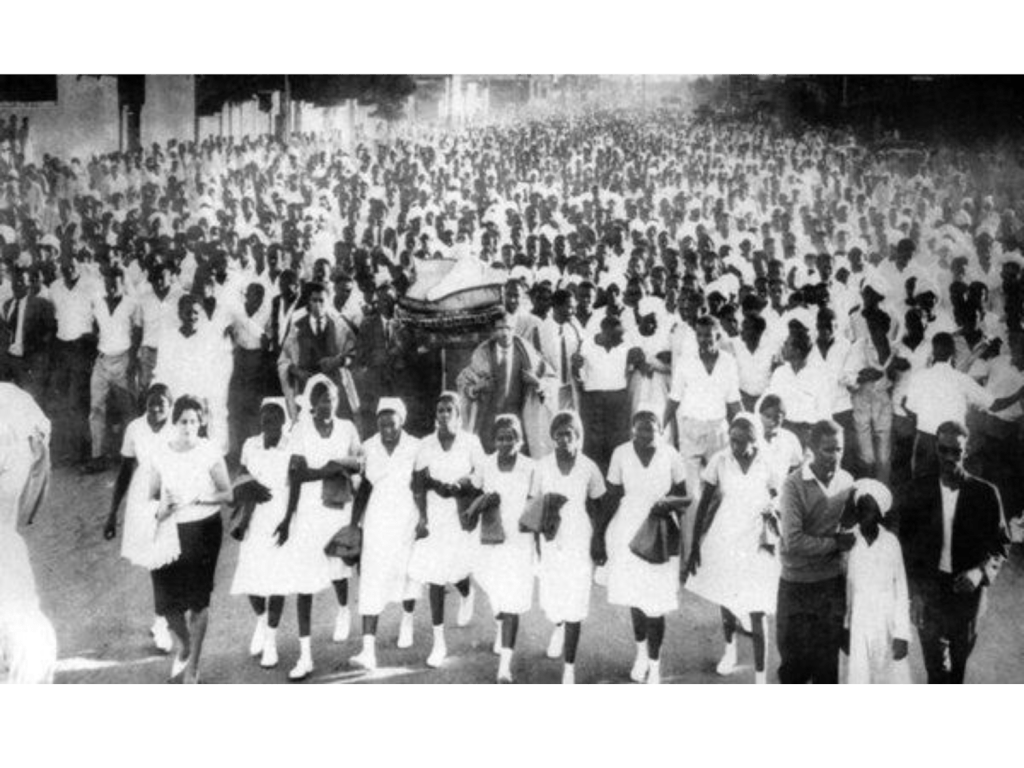
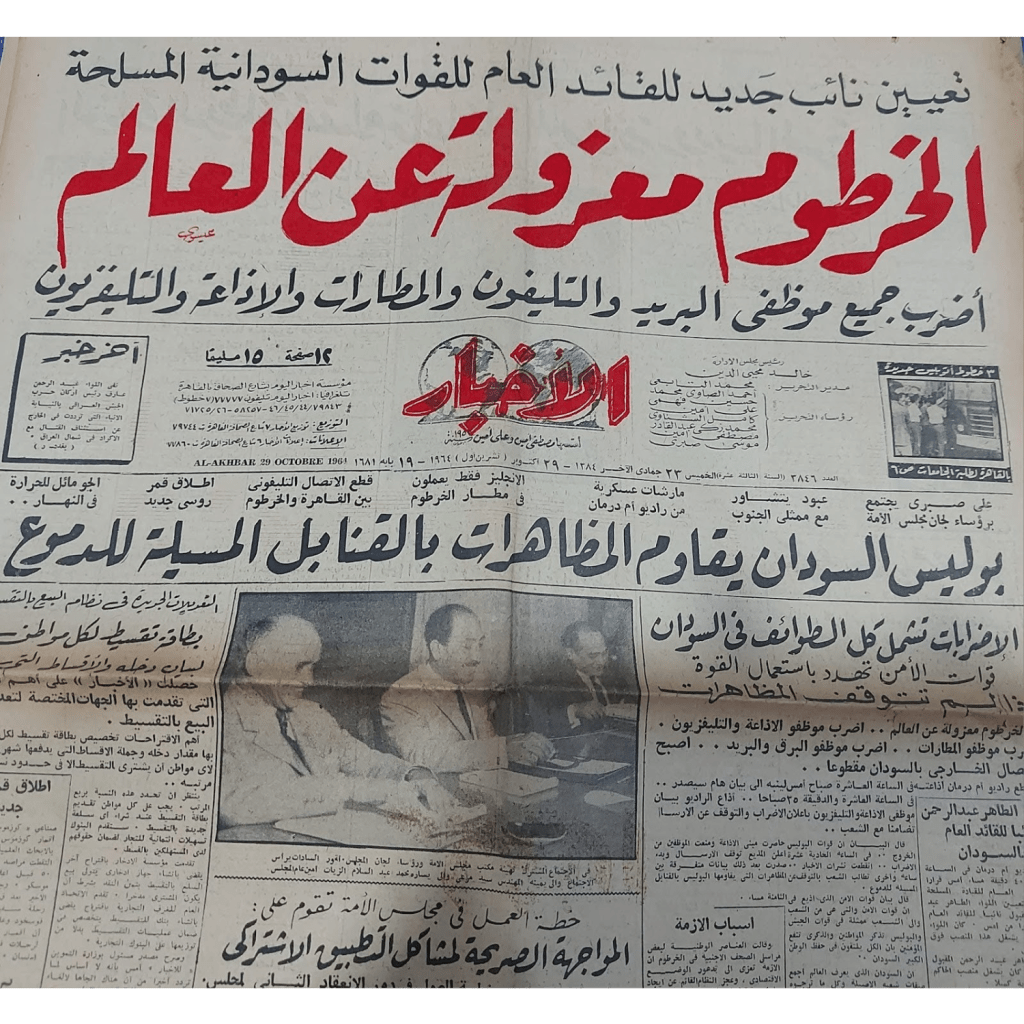
Mass movements — encompassing students, workers, doctors, lawyers, and civil servants — took to the streets in sweeping demonstrations demanding an end to military rule and the restoration of democracy. The revolution ultimately succeeded in compelling the regime to relinquish power, thereby becoming the first peaceful popular uprising in both Africa and the Arab world to overthrow a dictatorial regime through civil mobilization.
Yet despite this historic triumph, the democratic experience that followed proved short-lived. It was marked by the evident ineffectiveness of political parties and civil institutions, a weakness that paved the way for the May 1969 coup led by Jaafar Nimeiri. Herein lies a central paradox: how could a society capable of achieving such a remarkable peaceful revolution fail to safeguard its own democratic gains? This question compels a deeper examination of Sudan’s structural foundations, and specifically the nature of its so-called “civility”, understood not as a substantive transformation but as a modernist veneer concealing profound structural fragility.
The Modern State and Its Conceptual Foundations
At its core, the modern state is premised upon the rational and institutional organization of power, governed by the principles of law, citizenship, and sovereignty. It is a political entity in which authority is exercised through reason rather than kinship or sectarian allegiance, and through legal order rather than personal or religious loyalty. This conception of the state emerged in Europe following the disintegration of feudal and ecclesiastical systems, when civil loyalties supplanted earlier affiliations grounded in blood, faith, or feudal dependency.
In Sudan, however, the trajectory of state formation followed a markedly different path. From the early nineteenth century, Sudan remained subject to the rule of Khedive Muhammad Ali Pasha and his dynasty (1821–1885) , an era representing an extension of Ottoman imperial influence. This formative period laid down the economic and social structures that would continue to shape the country’s development for many decades.
Inherited Structures and the Asiatic Mode of Production
To grasp the nature of these enduring structures, one may invoke Karl Marx’s notion of the Asiatic Mode of Production, a system in which the centralized state monopolizes the economic surplus and controls the means of production. This contrasts sharply with European feudalism, in which private ownership was prevalent.
Within this framework, both the Ottoman and later the Khedival regimes exemplified what some theorists have termed the “dependent” or “bureaucratic Asiatic” mode of production, wherein the state apparatus itself became the locus of economic accumulation. This dynamic inhibited the emergence of an autonomous national bourgeoisie and obstructed the transition toward capitalism, industrialization, and urban modernity.
Consequently, Sudan inherited an economic-social formation that stunted the evolution of modern class structures and, by extension, delayed the rise of genuine notions of citizenship, the modern state, and civil society.
From the Mahdist State to the Anglo-Egyptian Condominium
When the Khedival regime collapsed in 1885 under the Mahdist Revolution, many anticipated a new beginning in Sudan’s historical trajectory. However, despite its popular and agrarian roots, the Mahdist state reproduced the same centralized and extractive structures of its predecessors. Relations of production and distribution remained governed by the logic of a dominant central authority, thereby perpetuating the very socio-economic order the revolution had sought to overturn.
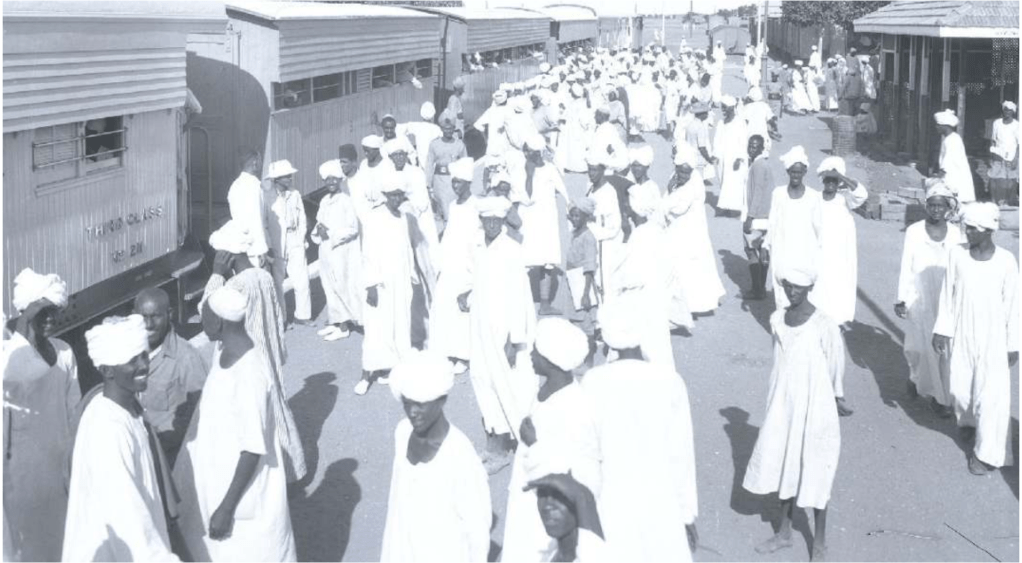
With the fall of the Mahdist state in 1898, Sudan entered the period of Anglo-Egyptian rule (the Condominium), which entrenched rather than dismantled this legacy. The colonial administration preserved existing quasi-feudal relations, recasting them through sectarian and traditional intermediaries that ensured both loyalty and social stability.
October 1964 and the Structure of Civil Society
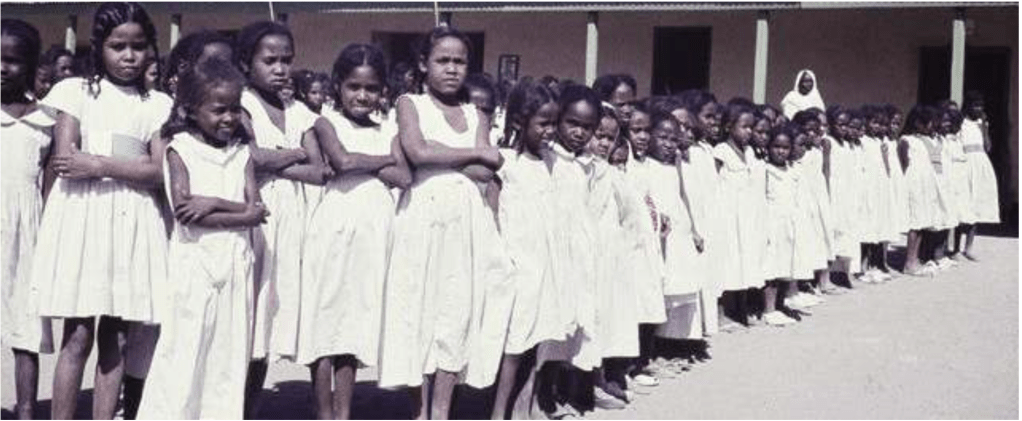
By the time of the October Revolution, scarcely eight years after independence, these inherited structures remained pervasive. Civil society — in the form of trade unions, professional associations, and political parties — emerged upon a pre-capitalist social and economic substratum, interwoven with sectarian, tribal, and religious loyalties.
Consequently, Sudan’s civil institutions were never truly “independent” in the modern sense. Rather, they functioned as a soft extension of the postcolonial political-sectarian elite that had inherited the apparatus of the colonial state.
It was therefore unsurprising that the modern civil forces proved incapable of defending the revolution’s gains. They collided with the entrenched traditional structures that continued to reproduce older power relations. Ultimately, civil society is but a reflection of the dominant socio-economic order, and cannot transcend it unless that very order is transformed.
Civil Society as an Instrument of Dependency
In dependent societies such as Sudan, the concept of civil society is often reproduced within frameworks of foreign funding and ideological mediation, transforming it from a vehicle of emancipation into a mechanism of external penetration. Rather than serving as an instrument of national sovereignty, it becomes a conduit for the perpetuation of dependency in new forms.
As the Marxist thinker Mowaffaq Mohadin observes: “Civil society in the Third World does not stand upon an autonomous national-class foundation; it constitutes a soft extension of the new colonial society.”
This assertion encapsulates the essence of Sudan’s predicament — the fragility of civil structures within states that have yet to complete the project of modern state formation or achieve genuine economic independence.
Conclusion: Liberation as the Precondition of Development
In light of the foregoing analysis, the October Revolution can be understood as both the culmination of modern national consciousness in Sudan and the revelation of its limits when confronted with premodern socio-economic structures.
Experience has demonstrated that development without liberation is an impossibility, for that:
- Economic power remains concentrated in the hands of a narrow exploiting minority.
- Society persists in divisions along sectarian and regional lines that preclude collective progress.
- Political and social consciousness remains circumscribed, incapable of erecting enduring institutions of transformation.
Thus, liberation is not merely the outcome of development but its essential prerequisite. Without the dismantling of inherited traditional structures, Sudanese civil society will continue to exist as a superficial manifestation of modernity, a thin veneer concealing deep-seated structural fragility yet to be resolved.


About the author
Hakim Abbas is a Sudanese engineer based in the United Kingdom.

Leave a comment